
biochar: the results are in
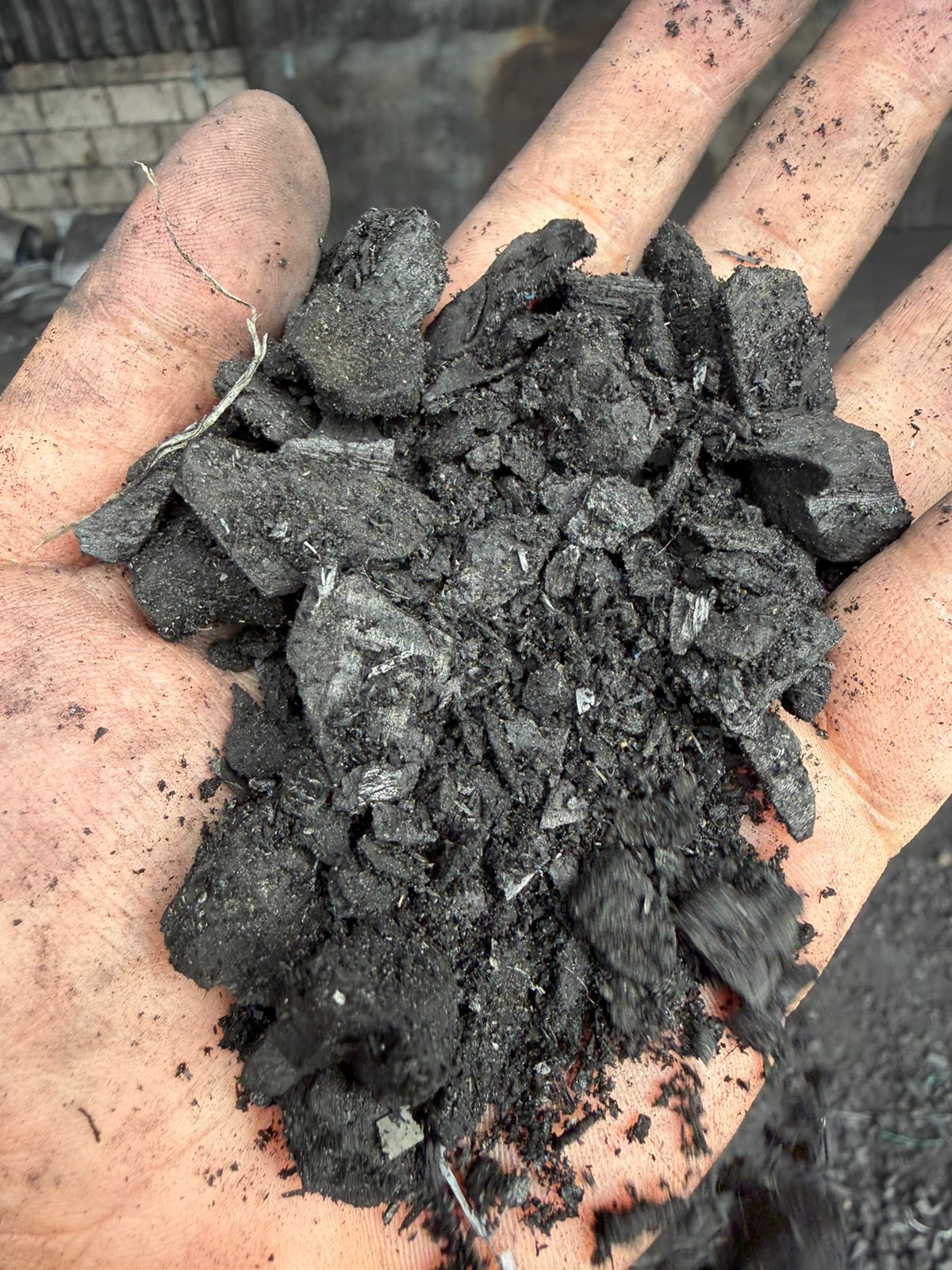
From Coffee Farm Wood Waste to a Characterized Biochar
On a coffee farm, caring for trees also means deciding what to do with the wood left behind by pruning and natural tree loss. At Sagro Farms, we began experimenting with biochar as a way to put that material to use. Our starting question was practical: could wood that might otherwise go to waste become something valuable for the land?
Those early batches were part of a learning process. We worked with partners to improve how we produced the biochar and to make the material more consistent. The next step was to understand what we had made through laboratory analysis.
In June 2026, the USDA Forest Service’s Trippe Laboratory characterized a sample from our coffee farm. The report gives us a measured starting point for evaluating the biochar and planning where to test it next.
What the analysis tells us
The sample had a pH of 8.86, indicating an alkaline material, and a calcium carbonate equivalence of 20.59%. Those results make the biochar worth investigating where soil acidity is a concern. The report also measured nutrients, including calcium, potassium, magnesium, phosphorus, and sulfur, along with dissolved carbon and nitrogen.
The laboratory reported concentrations for several metals as well. Characterization helps us ask better questions about appropriate uses, but this report alone does not establish a recommended application rate, a crop response, or suitability for every soil. Those decisions require soil testing and trials in the setting where the biochar would be used.
Looking beyond the coffee farm
Our first reason for making biochar was rooted in coffee production: use fallen and pruned wood more intentionally while continuing to care for the trees that support the farm. The laboratory results now give us a basis for exploring other uses.
One possibility is urban tree planting. In cities such as Baltimore, new trees must establish themselves in soils that can vary greatly from site to site. We are interested in working with planting partners and researchers to test whether our biochar, applied at suitable rates, could be a useful part of a broader soil management approach.
For Sagro Farms, this is a meaningful step from experimentation toward evidence. We have a characterized material, a clearer set of questions, and opportunities to learn how it performs on coffee farms and beyond. We will keep building that knowledge through testing and collaboration.
Interested in seeing the full Trippe Laboratory report? Email yemi@sagrofarm.com.